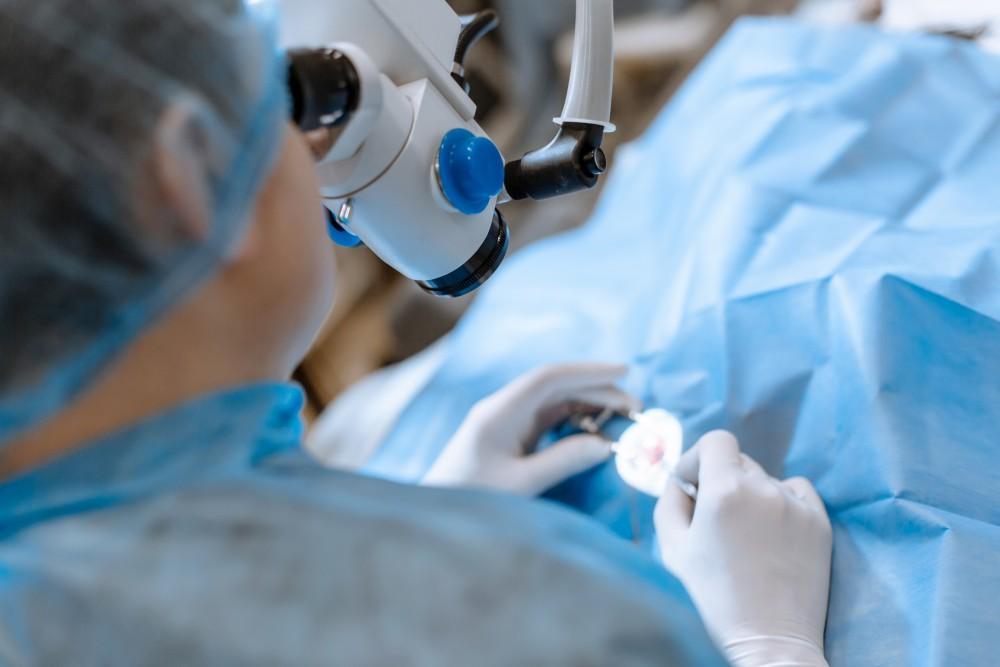
Cataracts develop when proteins within your eye’s natural lens start to break down and clump. This leads to a loss of visual acuity, including blurred vision, frequent prescription changes, faded colors, and increased difficulty seeing at night.
Without treatment, you’re at risk of becoming blind. However, lens replacement for cataracts is the most frequently performed surgery in the United States and around the world. As well as restoring clear vision, advanced cataract surgery can now correct certain refractive errors.
As a leading vision correction specialist, ophthalmologist Dr. Randa Garrana of Advanced Lasik in Midtown East, New York, and Duarte and Long Beach, California, can not only restore clarity, but also improve upon your visual performance.
In this blog, we’ll examine how refinements to cataract surgery can reduce or eliminate your reliance on corrective lenses, restoring clear vision in new and exciting ways.
Defining advanced cataract surgery
Fundamentally, cataract surgery replaces a defective natural lens with a clear, artificial replacement, called an intraocular lens, or IOL. Traditionally, these were monofocal, optimized for a primary distance and requiring corrective lenses for sharp vision in other situations.
Advanced IOLs
Today, there are options beyond monofocal IOLs. Multifocal IOLs work in a similar manner to bifocal or trifocal eyeglasses, combining different focal lengths into a single lens.
Multifocal IOLs use concentric rings to simultaneously place multiple focal images on the retina. Your brain adapts and naturally chooses the correct focus for your current need, called neuroadaptation.
Toric IOLs can correct certain amounts of astigmatism, a problem introduced by irregularities in the curve of the cornea. This front surface of your eye accomplishes the bulk of the light bending needed to focus your vision, while natural lenses and IOLs do the fine-tuning.
Compensating for the corneal irregularities, toric IOLs add vision correction during cataract surgery, leaving the corneas untouched.
Other procedural advances
Beyond improvements to IOLs themselves, there are other advancements that improve cataract surgery. These include:
- Laser assistance: Ultra-fast femtosecond lasers can now carry out some steps of the surgery with unmatched accuracy, efficiency, and precision
- Advanced imaging technology: Digital mapping of your eyes’ anatomy permits granular data that aids IOL selection and surgical planning
- Personalization: Advanced technologies improve the match of IOL to your needs
For many, cataracts are a natural part of aging, and surgery to correct the problem is typically routine. Advanced surgical options may give you opportunities to correct refraction errors in a customized way.
Specialist cataract care at Advanced Lasik
To schedule a cataract surgery consultation with Dr. Garrana and our team, contact your nearest Advanced Lasik location today. We have one East Coast office in Midtown East, New York City, and two West Coast offices in Duarte and Long Beach, California.